In this guide
- Begin with meaning before arithmetic
- Pass one: establish identity and period
- Pass two: separate the kinds of amounts
- Pass three: build a two-statement change log
- Worked example: the total changed but the cause is open
- Pass four: route the unresolved question
- Do not confuse employer cost with money deposited
- Turn the review into a specific request
- Know when the exercise is finished
- Sources and evidence limits
Begin with meaning before arithmetic
A pay statement contains numbers that answer different questions. Some describe compensation for a period, some show deductions, some report employer-paid amounts, and some explain distribution. Adding every visible figure is therefore not a meaningful review. Start by identifying what each amount represents and the dates it covers. This article offers an editorial four-pass method for organizing that review. It does not reproduce a current private CIS screen, interpret a reader's taxes, or promise that every statement will have the same layout as a public illustration.
Pass one: establish identity and period
Before inspecting a surprising number, confirm that you are reading the intended statement and employment context. Record the payment date, the period being reviewed, and any position or department information relevant to your question. If you hold more than one assignment, leave room to distinguish them. Comparing the wrong periods can make an ordinary timing difference look like an error. Equally, two statements with similar totals can contain different underlying events. The header is part of the evidence, not administrative decoration to skip on the way to net pay.
Pass two: separate the kinds of amounts
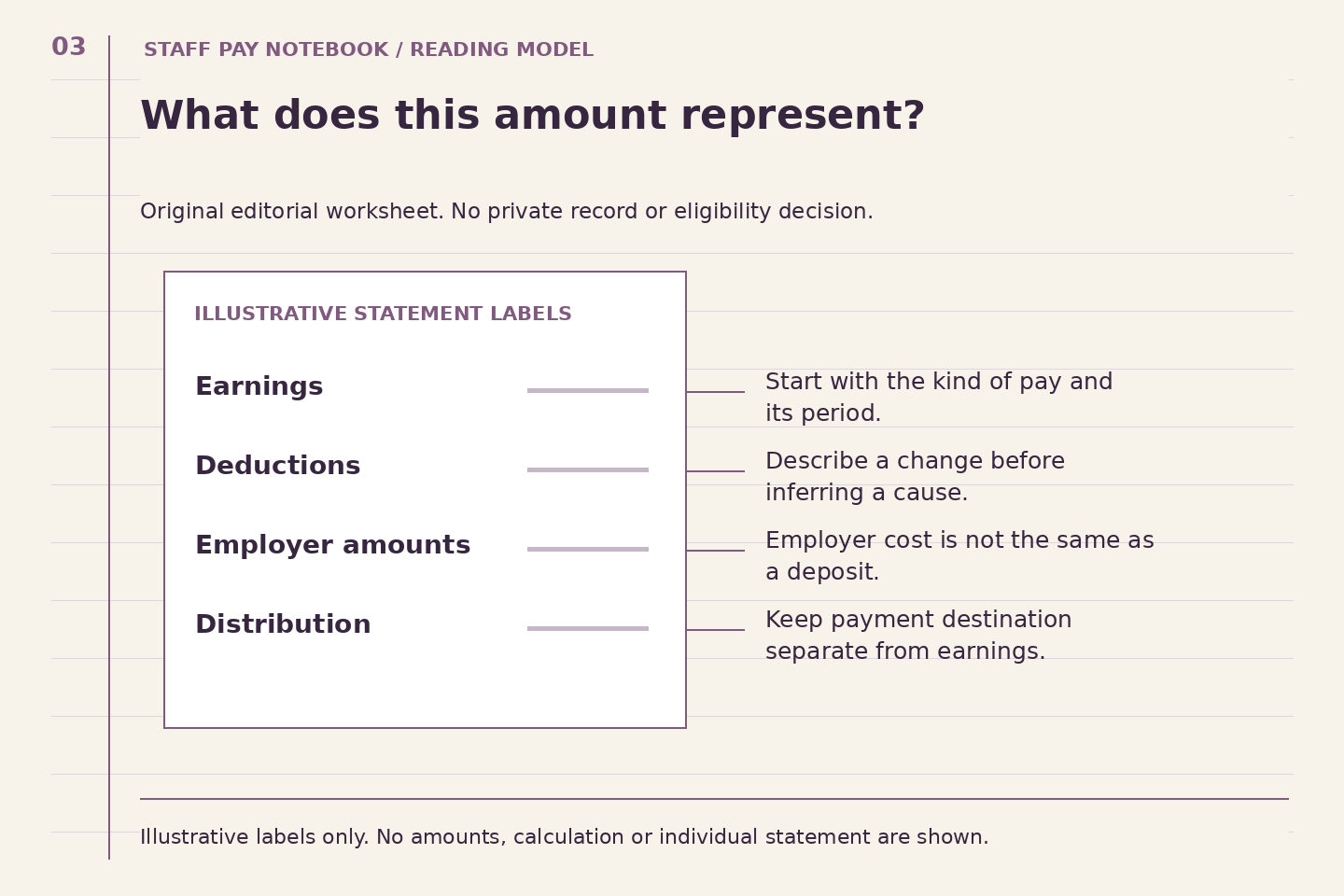
The University's public pay-stub guide distinguishes hours and earnings, taxes, before- and after-tax deductions, employer-paid benefits, leave information, and net-pay distribution. It also distinguishes current amounts from year-to-date figures. Use those categories as a reading map rather than a promise about a private interface. The guide includes older tax-field terminology, so it should not be treated as current personal withholding guidance. When a label is unclear, use the official explanation or ask Payroll which field answers your specific question.
Pass three: build a two-statement change log
Compare one category at a time across the two relevant statements. Write four short columns in your own note: field, earlier amount, later amount, and known event. Only fill the event column when there is evidence, such as a documented schedule change or a benefit confirmation. Otherwise write "cause unconfirmed." This keeps the comparison factual. A changed net amount is the starting symptom; it is not a diagnosis. You may discover that the question belongs to a deduction owner, a time-record reviewer, or the office responsible for a personnel action.
Worked example: the total changed but the cause is open
In a hypothetical review, an employee notices that the deposited amount differs from the previous payment. They first confirm the two statements concern the periods they intended to compare. Their change log shows unchanged ordinary earnings, a different deduction line, and no apparent change in distribution instructions. Those observations narrow the question, but they do not establish whether the deduction is correct. The employee asks for the meaning and effective period of that specific line rather than reporting that their wage rate was reduced.
Now imagine that the deduction owner explains that an adjustment spans more than one period. The employee adds the explanation and its date beside the line, then asks which later statement should complete the adjustment if that remains unclear. They retain the original comparison rather than editing it to make the explanation appear known from the start. This small discipline creates a reliable record of what was observed and what was subsequently confirmed. The example uses no real pay figures and implies no standard deduction pattern.
Pass four: route the unresolved question
The public deduction-code page includes an office-responsibility column. That makes it a useful routing aid, but a code description alone does not authorize a charge or establish that an individual's enrollment is correct. Use a code to formulate a question about a named line and period. Avoid sending a complete statement to several offices when a narrow description will do. Ask the responsible office which secure channel and supporting details it needs. Personal banking identifiers and unrelated deductions should not travel with an otherwise routine question.
Do not confuse employer cost with money deposited
A statement can show an employer-paid benefit amount without that amount being cash paid to the employee. Similarly, a year-to-date total summarizes a longer interval than a current-period line. Label both dimensions in any personal spreadsheet or written comparison: who pays or receives the amount, and which time span it covers. This prevents a visually large number from dominating an offer comparison or a payroll question. For personal tax treatment, benefit value, or financial planning, seek the appropriate qualified guidance rather than deriving an answer from column placement.
Turn the review into a specific request
A useful request identifies the statement date, the relevant field or code, the comparison period, and the question you need answered. For example: "Please explain why this line differs between these two statements and identify the period to which the adjustment relates." That request leaves room for either a correct explanation or a needed correction. It does not allege an error before the evidence supports one. Keep a brief resolution note when the question is answered, including any future statement that needs review.
Know when the exercise is finished
The four passes are complete when you can distinguish confirmed facts from unresolved ones and know who owns the next question. They are not complete simply because two totals happen to match. Check the official materials again if a label, policy, or statement format changes. Sources were reviewed October 1, 2026; the public illustration's continued availability is not proof that every detail has been newly revised. Used this way, statement reading becomes a repeatable evidence habit instead of a rushed attempt to guess a total.
Try the Five-Clocks Reading Lab to prepare a bounded question.
Continue reading: Build a Small Evidence Packet for a Work-Record Question, Leave Requests and Leave Records Answer Different Questions, Translate Skills Across University Occupations Without Stretching Them.